Links and Credits
The following people, agencies and businesses have made this website and project possible:

This project has been funded by the Heritage Lottery Fund, to whom we are very grateful.
Thank you to the Living Memory Association of Edinburgh who trained the Oral History Interviewers.

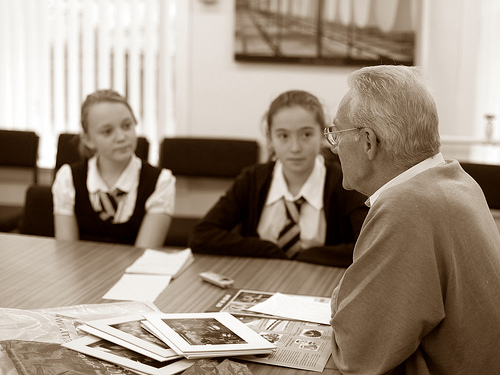
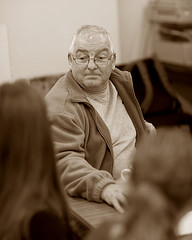
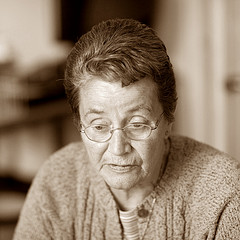
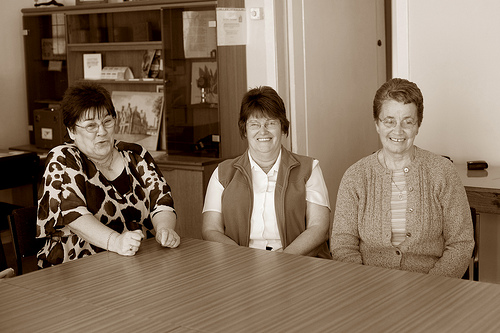
Sepia photo portraits of Interviewers and Interviewees courtesy of David Loney © 2009.
D & M LONEY PHOTOGRAPHY
Wedding & Portrait Photography
38 Glasgow Road
Denny
FK6 6BA
01324 824770
The Denny and Dunipace Mills Oral History Project is grateful to the following groups, agencies, businesses and individuals who provided resources, support and input into this project and calendar (including access to personal memorabilia and photos, research, advice and lots of leg work!):
Special thanks to Peter O’Donnell, Jimmy Young and John Jack for research assistance on local history and lore for this project and for sharing their personal archives.
Inveresk plc, Scotlandsimages.com, Denny Burns Club, Denny & District Community Council, Falkirk Council Archivist (Elspeth Reid), JPS Media (Joe Shaw), Denny Probus Club, St. Patrick’s Primary School, Denny Primary School, Margaret McLeish and Jean Jamieson from Callendar House FC Archives, The HLF Funding Officers, George Skelton, John Watson, Sonya Donaldson for transcriptions, Christine Bell, Tracy McNeil, all the CGI and DDHS volunteers, Mary Baxter and Tony Harris.
Interviewers
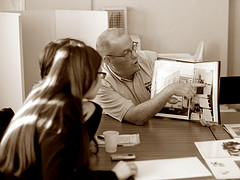
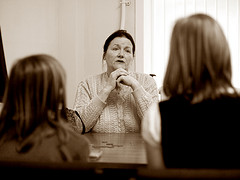
 The collecting and recording of the oral histories in August/September 2009 was a busy, friendly and happily noisy affair. After a training session with the Living Memory Association of Edinburgh, the young interviewers and the older interviewees gathered in the Heritage Rooms in Dunipace with digital recorders, photo albums, memorabilia, tea and biscuits…clustered into this corner and that. There was much laughter and also moments of serious contemplation.
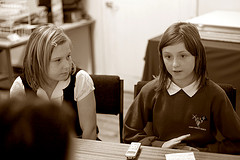
We hope to give you a flavour of what those afternoons were like, by randomly assembling historic photos, portraits of the participants, remarks from the children and quotes from the elders’ transcripts. A bit like a noisy, friendly Heritage Room gathering!
The Denny & Dunipace Heritage Society now have the interviews in audio and transcribed form, for posterity.
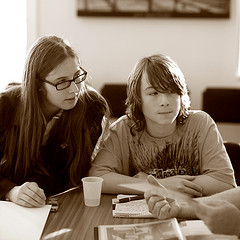
“I found it fascinating to see how the wages and all the employees’ details were hand written in big books. . .It must have been so difficult in the days before computers.”
Sometimes we ran out of questions, but when they told us things we could think of more questions to ask.”
“I learned that a penny could buy you loads of things.”
“They always had lots of paper cuts on their hands because they were counting the sheets of paper.”
“It was good to listen to people instead of looking it up on the computer.”
“We asked the about their jobs, their friendships and their lifestyles _ For fun they went swimming, dancing and went to the cinema.”
Interviewees
Counting Reams
 At that time there was a lot of ladies worked in the paper mill—when I started there were at least 100 women working in it. Every sheet of paper was checked one by one, by all these women. That was their job, day in, day out, checking the paper and they were happy doing that job as well. The music would be on, they’d be singing, working away and checking the sheet for dirt or anything like that. They had a special way of counting it, where they would fan up the paper and they counted it, 2 to 3 sheets at a time.
When you made cheque paper for the Bank of Scotland, you were only allowed one black dot in the square metre of paper. You can imagine if you got a black dot on the wrong place in a cheque, it could go from £10 to £100 or £100 to £10,000, if it was just in the wrong place. Very, very strict that paper.
Humour at the Mills
 There was one morning…the tea breaks had gradually extended, extended, extended and actually had 20 minutes for tea break instead of 10 minutes. And they were starting earlier, instead of going at 10 o’clock they were going at 9.50. This particular morning the foreman came out and read the riot act in the workshop. He came through and here’s this chap toasting his bread and he says “What are you doing?” he says “I’m toasting my bread” He says “You’re too early, you stop it” and he walked on and read the riot act in the welding shop and he come back and this guy still toasting his bread and he says “What are you doing”? He says “I’m toasting the other side.”
We had a plumber, I’ll never forget, he had a hole in his shoe, and he walked across the yard this day, a big puddle in the yard and he hops through the puddle and he gets half way through the puddle and says “oh no, wrong shoe” and he changed feet and hopped the rest of the way
Community
I was 33 year in the paper mill and I always thought I would see my time out in it…I would see my retirement in it but the sad reality is that it closed. But in the time I had great happy memories in it, a lot of sad memories as well. I would say probably the greatest was in the old mill, that was probably the best time I had. There was a lot of good guys, a lot of good people in it, as I say a lot of families. It was very family orientated; people connected to one another in it. One of the reasons a lot of people got jobs in it was somebody would speak up for you. If you were looking for employment your dad or your uncle would go speak to the managers, the bosses, and get you a job in the paper mill. So it was a big help. The sad thing is that it’s not there now.
Dangers
Q. Did you have to tie your hair back?
A. If you worked in the cutter house you did because you had to crawl under the cutting machines, the big blades, big ripper blades, with a basket in front of you and you crawled underneath that and you picked up the shavings, the paper that had been cut, that had been trimmed. It was a big rotor—if you can imagine a lawnmower, well this was a huge big version. The cutters were that size but if you can imagine a lawn mower, rotating with blades, well that’s what that was like cutting the paper. You had to tie your hair back then, in case you got caught.
Winners
Carrongrove had 90% of the catalogues in the world. It was the only paper in the world that could guarantee the true colours. . . In the old days for envelopes, it was always transparent paper and people could read your letters through the envelope. So they put a ‘laid dandy’ on and it made it all squiggly so you couldn’t read it
Trivial Pursuit’, that was the order that saved Carrongrove from going down in 1980. It was a gold mine for Carrongrove, made here, shipped to Canada and sent all over the world. We made 20,000 ton a year just purely for Trivial Pursuit.
Know M
onopoly? That whole board game was made in our group. Carrongrove made the board, Westfield made the money and St Cutlers made the coloured bits. A group effort. Monopoly, that was another winner.
Work and Play
When you came home you had your dinner and you had to help in the house and do housework, washed the dishes. There wasn’t any nice fitted carpets that we have now a days. Floors were polish
ed and done on Tuesdays and Thursdays, and brasses were cleaned. There were all different jobs in the house to do. . .But we did have a social life as well! You went dancing at the weekend—Friday night and Saturday night and sometimes on a Sunday, but you didn’t tell your mother you went on a Sunday!
We had a very active life. At these times we would think nothing of walking over to Bonnybridge and go into a café for an orange juice and walking back over again, that’s maybe about 2 and half miles.
No disrespect to the modern children, but I think we entertained ourselves better in these days. We didn’t have computers or anything like that to entertain us. . .
On Being Late
 The man who we called ‘the gaffer’, the manager, he was quite a crabbit man and depending on the mood he was in if you came in a wee bit late he would say “You’re late, you just go back down the road” and you would say “Oh please just let me stay, I’ll not be late again” and he would say “No, just go”. And you would start going down the stairs and he would call you back and say “Okay you can wait, but if you’re late tomorrow your definitely down the road”. But I have been sent home because I was late two days in a row.
On Difficulties
I didn’t find anything really that difficult to fix. I’m maybe being a wee bit big headed here. Some jobs were harder than others. There used to be a big notice up in the workshop ‘All difficulties are to be surmounted’ and I used to my best to adhere to that.
Getting Your Wages
Up at Carron, well that was the offices and the man used to come over on a Thursday and get his table and all his money, Mr Mitchell was his name, in a tray ,and you got your wages. You didn’t get a cheque; it didn’t get paid into the bank, you got your money in an envelope, then we went home and had our dinners. Mummies didn’t work in these days, well not very many. Mummies were mummies and housewives and they had your dinner ready for you going home. But then you usually helped to do up the dishes. I just gave my money to my mum and I got my pocket money. You never had a bank account then. I never had a bank account, never. I never knew what it was like inside of a bank because it was only business men that went into the bank. It was saving stamps we got.
Team work
We found in our foundry, it was a right family business as I said and most of the men who worked in the foundry worked there from they left the school until they retired. A lot of factories, people start and they’ll change jobs, and change jobs and change jobs but these chaps didn’t. They mostly worked from when they left the school probably at 15 till they retired at 65. In fact some worked on till they were 70. We had great guys in the factory and we worked as a team which is very important. Say if something goes wrong in the foundry, say there was fault in the furnace and it breaks down—or what could happen is you could get a leak in the furnace where there was metal spillage and everybody would start running and help and get it cleared up. So it was very important that you worked as a team.
About Us
Denny and Dunipace
 This stained glass window which resides in the old Denny Town House shows the 1892 Burgh of Denny and Dunipace Seal. The Angel of Peace in the window is also depicted on the 1956 Burgh of Denny and Dunipace Coat of Arms. Curiously the angel changes sex between the Seal and the Coat of Arms, from female to male.
The story goes that the hills at the new cemetery (where Dunipace used to be until circa 1860) were constructed to commemorate the signing of a peace treaty between the Romans and the Caledonian tribes.
The story says that these hills were called by their Latin name ‘Duni Pacis’ – hence the name Dunipace.
Elements in the 1892 Seal are the angel – carrying an olive branch signifying peace; a bridge – signifying the joining of the village of Denny with the village of Dunipace; Mount Vesuvius, anvil and hammer – representing the iron foundries of the Burgh; papyrus leaves – representing the paper making industries of the Burgh; the snakes or caduceus, a Roman symbol for truce, neutrality, and non-combatant status. Elements retained in the 1956 coat of arms are the angel (this time carrying palm branches for victory), River Carron and bridge.
The 1935 Silver Jubilee coin has the same images as the stained glass window. We assume it was distributed in the tradition of golden jubilee celebrations in the 1920s in which, at the Gala Park festivities, children were given commemorative medals as keepsakes. This aluminium coin was discovered in 2004 on Wellsfield Farm. On the reverse side are images of King George and Queen Mary 1910 -1935.
About Us: Two Community Groups Join Forces
The Denny & Dunipace Mills Oral History project evolved from the association of two community groups in Dunipace – the Denny & Dunipace Heritage Society and Community Green Initiative. The two groups formed an informal partnership in 2009 to refurbish the Heritage Rooms at Milton Row where they hold their mutual offices.
While painting and redecorating over a series of Sunday mornings in the spring of 2009 – talking over paint cans, ladders and scaffoldings, discussions began about having an oral history project, seeking funding for it…and the rest is history.
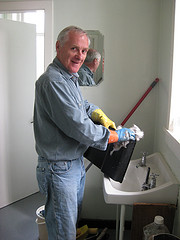
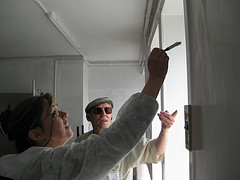
The two groups continue to work together for our common goals – preservation and enhancement of our community.
The Denny & Dunipace Heritage Society
 The Denny and Dunipace area has a rich industrial heritage, and the Heritage Society sees this past as a treasure which should not be lost, but actively promoted. To this end the Society seeks to promote activities which keep the memories of this heritage alive. These include:
• Publishing Heritage Trail leaflets highlighting sites of historical interest
• Show evenings, a recent one being on the hiding of the Stone of Destiny in Scotland, and the part Denny played in this.
• Arranging heritage trail walks for local schoolchildren
• Presentations to other local groups such as Probus on Heritage Subjects
• Providing the Heritage Rooms for the use of other local groups
• Working with other local groups to our mutual advantage
An example of the last item is the Oral History Project reflecting the way of life of workers in the local mills. The Society is working closely with Community Green Initiative to progress this project.
The Community Green Initiative
 Community Green Initiative (CGI) is a volunteer group working to beautify and enhance Dunipace, Denny and district through litter clean ups, green awareness raising and community engagement. We stand against litter, fly tipping, dog fouling, invasive species and apathy. Originators of the Green Dog Walkers project, CGI stands for community spirit, team work and energetic solutions. We began work in 2006 and were officially constituted in June 2008. Our meetings are open to the public.
Please visit our website and read our quarterly “green & good news” newsletter, New Leaf News at: www.cgiscotland.org
If you would like more information on the Oral History Project or have information for us - email us at:
This email address is being protected from spambots. You need JavaScript enabled to view it.
This email address is being protected from spambots. You need JavaScript enabled to view it.
Page 1 of 2